Numèric 2026 Grant — The Word
Terms ar ca en es fr zh · Form ca · Form en
Open call until 8 September · Decision: 22 September · Residency: 2 to 30 November
Download
1 · PURPOSE
The aim of Les antípodes is to foster critical thought and artistic experimentation through processes of research, creation, presentation and debate directed at exploring new ideas, associations and forms of expression, relation and experience.
To this end, Les antípodes opens Numèric 2026: two research and creation residency grants in Agullana, Alt Empordà, addressed to artists, thinkers and scientists of all branches —formal, natural, social and applied— working in any field at the intersection of art, culture, science and thought.
Numèric 2026 is a collaboration between Les antípodes and Bòlit, Centre d'Art Contemporani, Girona, and the Museu de l'Empordà, Figueres, with the support of the Generalitat de Catalunya, Agullana Town Council, Figueres Town Council and Acción Cultural Española (AC/E) through the PICE – Residencias nacionales programme.
2 · CONCEPTUAL FRAMEWORK
The Word as a fundamental principle of creation and divine manifestation is present in widely distant cultures that share the conviction that the word is not a mere vehicle of communication but the force that precedes matter and organises it, articulates the Cosmos and gives meaning to existence. In the Judeo-Christian tradition, God creates by speaking, so that the Word is the instrument that crosses the abyss between nothingness and being. In Islam, the Quran is the uncreated word of Allah, dictated literally to the Prophet; to recite it is to take part in the divine act that sustains the world. In Sanskrit, the Oṃ condenses the originary vibration of the universe into a single syllable; the Vedas are eternal revealed poems; and mantras do not describe reality: they summon it. The Word, then, is not only thought, bond and memory, but subject and tool of creation, a bridge between matter and spirit. Pau Riba expressed this by noting that ποιητής (poietes) means creator, and that it is as true that the poet is a creator as that the Creator is a poet — so that Cosmos is the body (cos) that has poured itself out —versed itself— into the single verse that is the universe.
From another perspective, contemporary science shares this intuition and has displaced it from heaven to the cell. In Cosmos, Carl Sagan describes life as a text: a four-letter alphabet carrying the hereditary instructions of every organism, written in essentially the same language for all living things. DNA thus becomes a material text whose message travels across billions of years and which, like the mantras, does not describe life but summons it at every cell division. Lynn Margulis countered that the language of life is chemistry: bodies incorporating one another, symbioses closer to flesh than to word. And between these two positions, Guenther Witzany holds that all interactions between cells are sign-mediated — that is, processes of communication. Beyond mysticism and poetry, text reappears in science as the grammar with which living beings speak themselves to one another and, in saying themselves, make themselves.
And now, for the first time, large language models (LLMs) detach the Word from the flesh and —from a voracious yet inert materiality— generate text through a probabilistic architecture trained on the immense repository of human language: they predict, word after word, what is likely to come next. Human work remains critical in the configuration and development of these models, but what was once inseparable from someone speaking —god, poet, cell, body pouring itself out— and what we regarded as a singular human faculty is also beginning to take shape as an autonomous electric process, unpredictable and hard to comprehend, without experience or will: pure combinatorics that questions us about its processes and, in turn, about our own.
Numèric wishes to delve into these questions by exploring new forms of thought, creation, cognition, experience and connection arising from LLMs —or from similar tools and systems— or articulated through them, which blur the boundaries between comprehension and simulation, between authorship and recombination, and in which probabilistic calculation, linguistic mimesis and a form of emergence converge to defy the established categories of creativity and intelligence.
We deliberately say that they generate language: grammar would reduce the description to syntactic competence; semantics would presuppose genuine understanding where there may only be statistical coherence; literature would narrow the field. In its ambiguity, language keeps an essential question open: do LLMs merely produce well-formed textual sequences, or do they participate, in some way we cannot yet delimit, in language as a phenomenon —as the faculty of meaning, of making world with words?
We find antecedents and analogies of this combinatorial logic in Ramon Llull's Ars Magna and its wheels of concepts that aspired to generate all possible knowledge; in Joan Brossa's Sextina cibernètica and in the combinatorial poetry and formal constraints of the Oulipo, which explore the generation of text from rules; in oracles, prophecies and divinatory practices, which draw meaning from randomness and project coherence onto the fragment; in oral tradition and formulaic transmission, where every recitation is at once repetition and variation; even in translation, which always operates as a probabilistic approximation between linguistic worlds. Art, philosophy and science also offer examples of this tension between system and emergence, such as the surrealist exquisite corpses, Burroughs's textual machines, automatic writing, musical improvisation, or scientific simulations that model realities without fully understanding them.
The interest of this call centres on LLMs as mirrors of language and of human creativity, as devices that, in simulating us, interrogate us: what do they reveal about authorship, originality and meaning when a system generates text that moves, persuades or deceives without experience or intention? And, as models incorporate their own texts into their corpus, can we still claim that they operate exclusively upon human experience?
This year, Numèric invites participants to explore the idea of language models as uncomfortable interlocutors that displace our certainties about what it means to think, write and create, and as spaces of collaboration and friction between human and artificial intelligence, away from utopian and dystopian discourses, invoking the questions that emerge from critical thought and artistic practice.
3 · RESIDENCY
The residencies will run simultaneously for four weeks, preceded by one month of preparation and followed by a two-month closing period.
Numèric offers an environment conducive to relations and exchange between participants, with spacious, luminous and independent work spaces for each of them, suited to the needs of the processes to be carried out there, and a shared terrace in the centre of Agullana. Residents will also have spaces for meeting, dialogue and public presentation.
Numèric will support the participants and, should they wish to connect with agents of the local, academic, artistic or professional ecosystem, will generate opportunities for encounter and exchange. It will also organise any activities that may arise during the residencies, making the appropriate contacts and providing the appropriate diffusion.
The residencies will conclude with an informal presentation of the work carried out. The results may be incorporated into the publications or the public programme of Les antípodes, at the dates and with the corresponding assignment as the case may be.
The grant includes accommodation in Agullana for the four weeks of the residency, in a shared, centrally located apartment.
Numèric is not an acquisition prize and does not imply any transfer of rights over the work: it is a research and creation residency grant, with accompaniment, meals and stipend, and authorship belongs to its creators.
4 · WHO CAN APPLY / REQUIREMENTS
The call is open to everyone: it is addressed to artists, thinkers and scientists of any discipline and origin, both individually and as collectives. In the case of collectives, the stipend will be shared among the members.
Proposals must be genuine, original and not copied.
Whatever the language in which the proposal is to be developed, applications must be submitted in Catalan or English. Applications must be submitted through the form, which may include an attached PDF of up to five pages and 10 MB. Only one application may be submitted per person or collective.
Applicants must be of legal age and able to reside in Agullana during the four weeks of the residency.
5 · GRANT / RIGHTS
Each grant provides a stipend of 1,000 euros as taxable base —to which the corresponding taxes and withholdings will be applied—, round-trip travel within the European Union, accommodation and meals during four weeks in Agullana.
The accommodation can host the residents' immediate family; the conditions will be agreed with the organisation during the preparation. The travel and meals included in the grant cover the residents only.
Numèric will also provide the resources specified in the applications and defined during the preparation, as well as support and advice throughout the work processes.
The authorship and intellectual property of the works and research developed always belong to their creators. Selection implies no transfer of rights nor acquisition of the work.
The credits and future diffusion materials of the resulting works shall acknowledge the support of Numèric 2026 and its collaborating entities.
6 · CALENDAR
Applications may be submitted from 23 July to 8 September 2026.
The selected proposals will be announced on 22 September.
The residencies will take place from 2 to 30 November 2026 in Agullana.
7 · EVALUATION CRITERIA (from most to least relevant)
Singularity and innovation: approaches and practices that depart from familiar formulas, present a particular vision and explore ideas, media, processes and formats that challenge established conventions and take us further.
Relevance: proposals that engage with this year's conceptual framework and address large language models from artistic practice, critical thought or scientific research, beyond the instrumental use of the tools.
Interaction and transfer of value: envisaging relations with the social and geographical environment of Agullana and the Empordà, and the presentation of the residency's outcome in an editorial, on-site, performative, sound, audiovisual or other format.
8 · DECISION AND COMMITMENTS
Proposals will be evaluated by a committee formed by Les antípodes and the collaborating entities. The decision will be communicated to the selected candidates and made public on 22 September 2026. The call may be declared void if the committee considers that no proposal reaches the required level.
Selected candidates commit to residing in Agullana during the four weeks of the residency, to taking part in the final presentation of the work carried out, and to authorising the use of the graphic documentation of the process for the diffusion and justification of the programme before the collaborating entities.
Numèric commits to providing the spaces, accommodation, meals, stipend and accompaniment described in these terms, to respecting the authorship and rights of the projects, and to disseminating the residents' work.
9 · INSURANCE AND COVERAGE
Numèric holds civil liability insurance covering the spaces and activities of the programme.
Ordinary health coverage is the responsibility of each resident: citizens of the European Union must hold the European Health Insurance Card or an equivalent document, and all others a health or travel insurance valid in Spain for the entire stay.
Professional coverage is also the responsibility of each resident. If a selected candidate does not hold the professional registration required to receive the stipend and payment must be arranged through Les antípodes, the costs arising from this arrangement will be deducted from the stipend.
Residents are responsible for their own equipment and materials brought to the residency.
10 · LOCATION
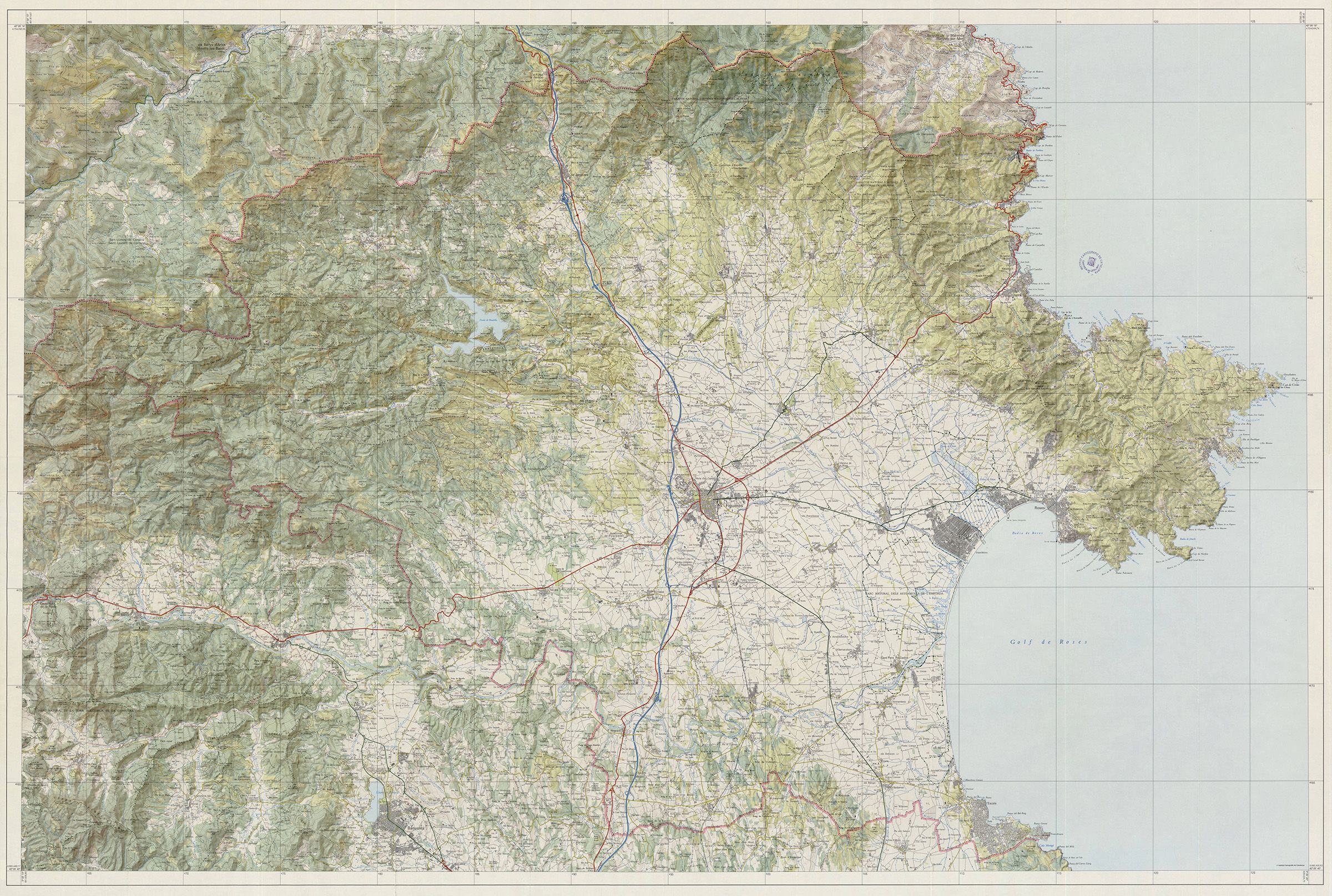
Les antípodes is located in Agullana, a village of nine hundred inhabitants in the Alt Empordà, at the centre of the triangle connecting the Canigó with the Bassegoda and the Cap de Creus.
The village is connected to Figueres (20 km) by a coach running twice a day, and is well connected by road and motorway with the Vilafant high-speed train (TGV) station (20 km), Perpignan (40 km), Girona (60 km), Barcelona (160 km) and Montpellier (190 km).
11 · DATA PROTECTION
The personal data provided in the application will be incorporated into a processing operation under the responsibility of Les antípodes (Volga Tanganyika, SL) for the purpose of managing the call, the selection and, where applicable, the residency, as well as the diffusion of the programme. The legal basis for the processing is the applicant's consent. Data will not be transferred to third parties, except to the collaborating entities of Numèric 2026 insofar as strictly necessary for the management and justification of the programme, and will be kept for as long as necessary for these purposes. Interested persons may exercise their rights of access, rectification, erasure, objection, restriction and portability by writing to hola@tanganyika.eu.
12 · ACCEPTANCE OF THE TERMS
Participation in the call implies full acceptance of these terms. Any matter not provided for herein will be resolved by the organisation, whose decision will be final.
13 · FURTHER INFORMATION AND CONTACT
lesantipodes.com / hola@lesantipodes.com / +34 633 815 285